

Veck.io Review: Simple Enough to Start, Deep Enough to Keep You Playing
I have a soft spot for browser games that don’t waste my time. Give me a game I can open in a tab, understand within a few minutes, and start enjoying without downloading a massive client, and I’m already interested. Veck.io fits that description pretty well, although I think calling it “simple” can be a little misleading.
Yes, you can understand the basics quickly.
No, that doesn’t mean you’ll immediately be good at it.
That’s actually one of the things I like about Veck.io.
The first time I loaded into a match, I wasn’t thinking about strategy. I was doing what most new players do – running around, looking for opponents, shooting at anything that moved, and trying to figure out why I was losing fights that I thought I should have won.
After a few rounds, I started noticing the difference between playing the game and actually understanding it.
That distinction is important.
Veck.io is a multiplayer FPS with fast matches, a large selection of weapons, different game modes, and movement mechanics that give players more control than you might expect from a browser-based shooter. The game features dozens of weapons across categories such as rifles, shotguns, snipers, launchers, melee weapons, and other equipment, while its available modes include formats such as Free-for-All, team battles, 1v1, and Gun Game.
For someone completely new to FPS games, that might sound like a lot.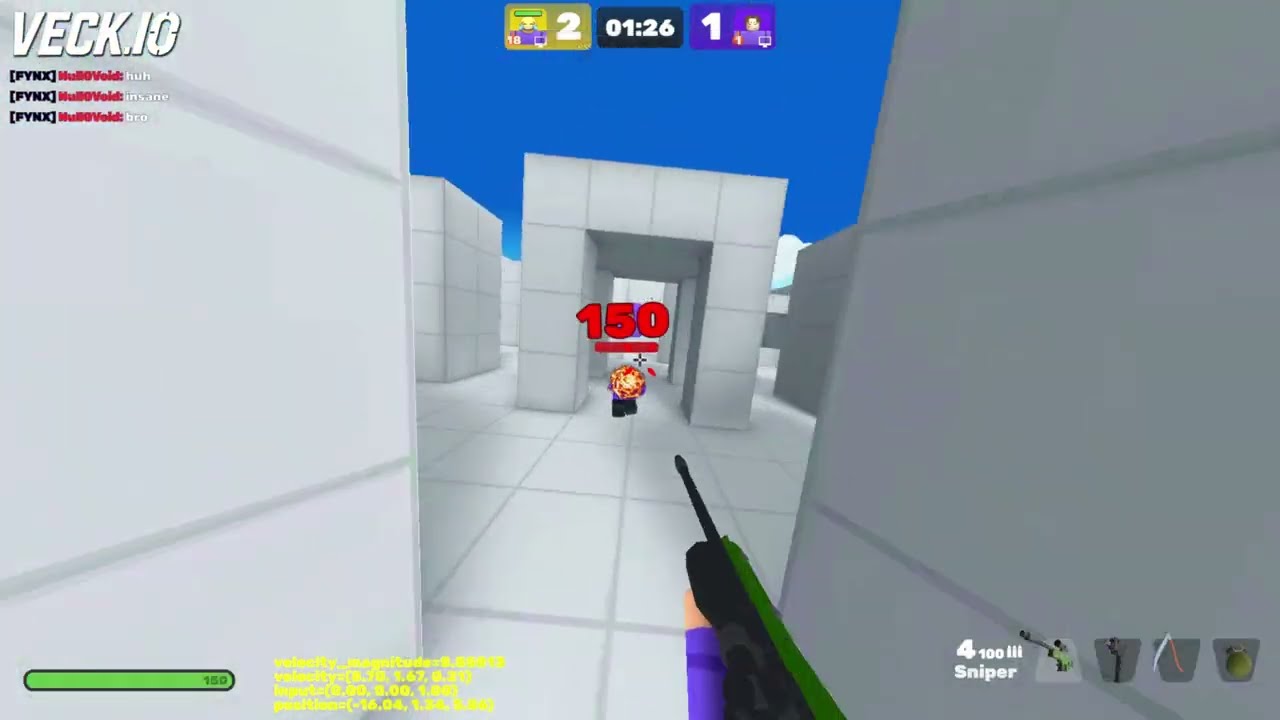
It really isn’t.
You can start with one weapon, learn the basic movement, and gradually branch out. In fact, I’d recommend doing exactly that. Trying to understand every weapon immediately is a good way to make the game feel more complicated than it actually is.
Pick something comfortable.
Learn how it behaves.
Then experiment.
I usually prefer versatile weapons when I’m learning a new shooter because they let me focus on the fundamentals. With Veck.io, that means learning how quickly you can move between cover, how aggressively you can approach opponents, and how long you can safely stay in one position before someone notices you.
And yes, someone will notice you.
That’s one lesson the game teaches pretty quickly.
Standing in the middle of an open area while trying to line up the perfect shot is rarely a good plan. You might get away with it against an inexperienced player, but once someone knows what they’re doing, you’re basically volunteering to become an easy target.
Movement matters a lot.
Veck.io includes mechanics such as jumping and sliding, and learning how to combine movement with aiming is one of the easiest ways for a beginner to improve. (play.google.com)
I wouldn’t recommend constantly jumping around just because you can, though. That’s something I see newer players do all the time in shooters. They assume more movement automatically equals better movement.
It doesn’t.
The goal is to make yourself difficult to hit while keeping your own aim under control. If your movement becomes predictable or starts ruining your accuracy, you’ve gone too far.
The same idea applies to sliding. Use it to reposition, escape a bad situation, close distance, or make yourself harder to track. Don’t treat it like a button you’re supposed to press every few seconds.
Once you get comfortable with movement, I’d spend some time exploring the different game modes.
Free-for-All is probably the easiest place to start because you don’t have to worry about coordinating with teammates. You can focus entirely on your own positioning, aiming, and survival. It’s chaotic, but that chaos is useful when you’re still learning.
Team modes are a different story.
I enjoy them more once I’ve got a feel for the map because you can start thinking about the match as a larger battle rather than a series of isolated fights. You have to consider where your teammates are, which areas are contested, and whether pushing forward actually helps your team.
Sometimes it doesn’t.
This is one of those things I learned after repeatedly making the same mistake. I’d get a kill, feel confident, push farther forward, and then get surrounded. The correct play would have been to stay with the team and hold the position we’d just gained.
I knew that.
I ignored it anyway.
That’s multiplayer gaming for you.
The 1v1 mode is probably the best reality check in the game. When you’re alone against another player, you can’t blame your teammates for a bad result. If you lose repeatedly, something in your own approach needs work.
That’s not necessarily a bad thing.
Actually, I think it’s one of the best ways to improve.
You start noticing small details. Maybe you’re firing too early. Maybe you’re exposing yourself before you’ve identified your opponent’s position. Maybe you’re reloading at the worst possible moment. Maybe you keep taking the same route and making yourself predictable.
These are small mistakes, but they add up quickly.
The weapon system also gives the game some replay value because changing your equipment can completely change your approach. A close-range weapon encourages aggressive movement and tighter positioning. A sniper rewards patience. A launcher can change how you approach groups or enclosed areas.
The game has enough variety that I wouldn’t recommend limiting yourself forever to the first weapon you happen to like.
Once you’re comfortable, experiment.
You might discover that the weapon you initially disliked actually fits your playstyle better than expected.
One thing I particularly appreciate about Veck.io is its accessibility. You don’t need to treat it like a major gaming commitment. You can jump in for a few rounds, leave, and come back later. There’s no need to reserve an entire evening just to feel like you’ve made progress.
That makes it easy to recommend to casual players.
At the same time, there is enough depth for people who want to take it seriously.
That’s a difficult balance to get right.
I do think long-term players will eventually start wanting more. More maps, additional modes, fresh challenges, and continued balancing would all help keep the experience interesting for people who play regularly. The foundation is there, though, and the existing weapon and mode variety gives players plenty to experiment with.
For beginners, I’d summarize my advice in three words: slow down mentally.
You don’t need to rush every fight.
Watch where players are moving. Learn the maps. Keep yourself near cover. Choose a weapon that fits the situation. And when you lose, think about why before immediately blaming lag, the weapon, or the other player.
Sometimes you just made a bad decision.
I’ve made plenty.
For experienced players, the challenge is different. You already know how to aim and move, so improvement comes from refining your decisions. Learn to anticipate opponents instead of simply reacting to them. Think about where they’ll appear before they appear. Know when to push and when to back away.
That’s where Veck.io becomes genuinely satisfying.
It starts as a straightforward browser shooter, but the longer you play, the more you realize that small decisions have consequences.
And that’s why I think it works.
Veck.io doesn’t need to be the most complicated FPS ever made. It just needs to make you want to play another match, try another weapon, improve one weakness, or finally beat the player who eliminated you three rounds in a row.
For me, it does exactly that.
I can open it when I have ten minutes to spare, but I can also sit down for a longer session and actually feel like I’m improving.
Honestly, that’s probably the sweet spot for a browser FPS – easy to access, difficult enough to master, and entertaining enough that you don’t immediately close the tab after your first bad match.