

How to Get Better at Duotrigordle: A Competitive Player’s Review and Strategy Guide
I don’t play Duotrigordle to relax. I play it because the game gives me 37 guesses, demands 32 correct answers, and leaves exactly enough room for me to blame myself when everything goes wrong.
That’s my kind of puzzle.
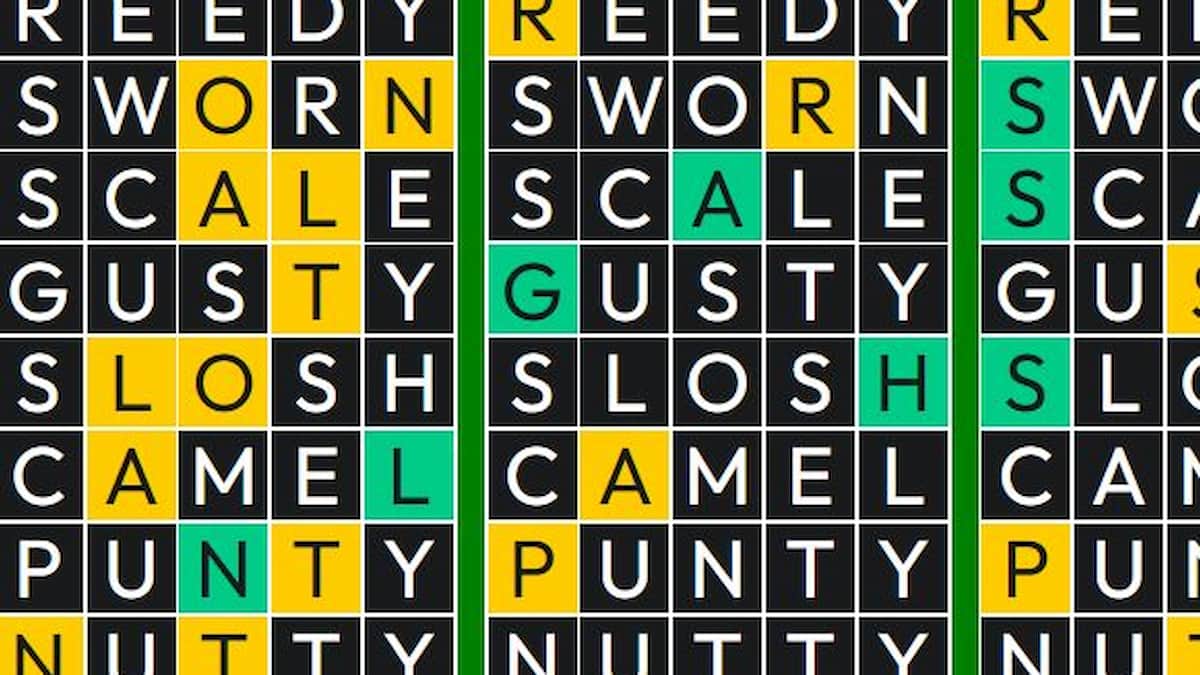
Duotrigordle is an online word game in which every five-letter guess is applied to 32 boards simultaneously. You win the standard game by solving all 32 hidden words within 37 attempts. The familiar green, yellow, and gray clues make the rules easy to understand, but the scale changes the strategy completely.
In Wordle, you can afford to concentrate on one answer and carefully reduce the possibilities. Duotrigordle asks you to think like a project manager with a vocabulary problem. Some boards are nearly finished, others need more information, and at least one will sit in the corner refusing to cooperate until the final few guesses.
I love that tension. It turns a familiar word game into a test of efficiency.
Duotrigordle Is Really About Guess Management
The name and 32-board layout make Duotrigordle look like an extreme vocabulary challenge. A strong vocabulary certainly helps, but guess management matters just as much.
The official Duotrigordle rules give players 37 attempts in the standard mode. Since each of the 32 answers eventually requires its own correct guess, only five moves can be used without directly solving a board. Those five guesses are your operating budget.
Most players spend three or four of them at the beginning to identify common letters. That leaves very little room for mistakes later. If you test six possibilities for a stubborn “_ATCH” pattern, the game is probably over even if you eventually find the right answer.
I think the cleanest strategy has three stages: collect information, convert clues into answers, and protect your remaining guesses. The mistake is staying in the first stage for too long.
Building a Strong Opening
Your first words should test common letters with minimal repetition. You want a mixture of vowels and high-frequency consonants that produces useful clues across many boards.
I won’t prescribe one magical opening sequence because that encourages players to memorize words without understanding why they work. Instead, judge an opening by three questions:
Does it test mostly unique letters? Does it include several common vowels? Does the second word introduce meaningful new letters rather than recycling the first?
If the answer is yes, you’re probably in good shape.
A three-word opening can reveal fifteen unique letters in theory, although letter frequency matters more than hitting an impressive total. Testing Q, X, and Z early may look efficient on paper, but those letters won’t help as often as R, S, T, L, N, or C.
Four setup words provide more coverage, but they also consume almost your entire spare-guess allowance. I use a fourth only when the first three produce unusually weak information. Otherwise, I begin solving.
New players sometimes enter five broad test words because the game gives them five guesses beyond the answers. That leaves no margin for ambiguity, typing errors, or unlucky word families. It’s mathematically neat and practically uncomfortable.
Choose Answers That Keep Working for You
Once you can confidently solve a board, ask whether its answer contains letters that remain useful elsewhere. You have to enter every solution eventually, but the order can improve your efficiency.
Imagine that you’re certain about two answers: GUILE and STOMP. Several unfinished boards still contain unclear G, U, I, and E patterns, while S, T, O, M, and P are already well tested. Solving GUILE first may reveal more valuable information.
This doesn’t mean you should spend five minutes calculating the theoretical value of every answer. Duotrigordle is a word game, not an investment committee meeting. Just pause occasionally and choose the solution that tests letters you still care about.
You should prioritize boards with unique or nearly unique patterns. A word such as “C_A_R” may have few realistic possibilities once eliminated letters are considered. By contrast, “_IGHT” can belong to a large family. Leave ambiguous boards alone until answers elsewhere provide more evidence.
That patience saves guesses. It also feels strangely satisfying when a word you enter for another board turns five uncertain yellow tiles into one obvious solution.
The Endgame Is Where Good Runs Collapse
You may reach the final stretch with eight guesses left and seven unsolved boards. That looks comfortable. It isn’t necessarily comfortable.
First, count how many answers are already known. Every known word still needs to be entered, so those guesses are effectively reserved. If six boards have clear solutions and one remains uncertain, you don’t really have eight flexible moves. You have two.
I regularly perform this little count because Duotrigordle’s interface can create a false sense of security. A screen filled with green clues feels like progress, but unentered answers still consume your remaining turns.
The “Hide Completed Boards” option helps by removing solved puzzles from view. It reduces clutter and makes the remaining workload easier to judge. Hiding empty rows can also compress the interface, which is useful on a laptop or phone.
Input hints are worth keeping enabled while you develop consistent habits. Ghost letters display confirmed positions, and inconsistency warnings flag guesses that contradict known information. If you’re aiming for a purely unaided challenge, switch them off later. I care more about making good strategic decisions than proving I can manually track several hundred colored squares without overlooking one.
Watch Out for Repeated Letters
Duplicate letters cause a ridiculous number of failed Duotrigordle runs. We see one yellow A and unconsciously assume there’s one A in the answer. Then a word such as ARRAY appears and makes that assumption look careless.
The clue system provides information about each submitted copy of a letter, so study the exact color pattern. If you guess a word containing two Es and receive one colored E plus one gray E, the answer usually contains one E. If both receive color, you’re looking for at least two.
Regular players should make repeated-letter analysis automatic. When a pattern seems impossible despite strong clues, duplicates should be one of the first explanations you consider.
I also keep an eye on common double-letter structures: LL, EE, OO, SS, TT, and repeated letters separated across the word. Duotrigordle’s large answer set makes unusual-looking patterns appear more often than they would during a single daily Wordle.
Which Duotrigordle Mode Is Best?
The standard Daily Duotrigordle remains the best all-around mode. It lets you choose your opening words, inspect every board, and compare results with other players.
Practice Mode is where you should develop strategy. Use it to compare three-word and four-word openings, test unfamiliar vocabulary, and learn how aggressively you can begin solving. Unlimited practice removes the emotional weight of losing a daily streak.
Sequence Mode gives you 39 guesses but reveals only one board at a time. You can’t abandon an ambiguous word and work elsewhere, which makes efficient elimination essential. I find it more intense than the standard game because a single difficult pattern can block all progress.
Jumble Mode randomly chooses the first three guesses and allows 38 attempts. This is an excellent test of adaptability. A memorized opening won’t save you, so you must evaluate the clues you actually receive.
Perfect Challenge is the closest thing Duotrigordle has to an expert exam. You must finish all 32 boards in exactly 32 guesses, with the first entered word automatically counting as correct. Every subsequent guess needs to solve a board. It removes almost all room for exploration and rewards players who can use information across the grid with brutal efficiency.
Stats, Leaderboards, and Speedrunning
Duotrigordle includes game history, statistics, a global leaderboard, and the option to create private leaderboards with an account. Those systems give competitive players more to pursue than a daily win.
You can also enable a speedrun timer. I recommend focusing on consistency before speed. A fast failed puzzle is still a failed puzzle, just with extra cardio for your fingers.
Once your win rate becomes reliable, begin trimming hesitation. Learn to recognize common endings, scan boards in a consistent order, and enter obvious answers without repeatedly checking them. Interface settings matter here. Wide Mode can display boards more efficiently on a desktop screen, while hiding completed boards keeps solved information from stealing attention.
Solve Assist can automatically complete boards whose answers are fully deducible. It reduces tedious cleanup, but I leave it disabled for competitive runs because entering and organizing the answers is part of the challenge. Casual players may reasonably make the opposite choice.
Where Duotrigordle Struggles
The game’s greatest strength is also its largest weakness: there is a lot to manage. Scrolling between 32 boards can become tiring, especially on a small display. You may lose your place, overlook a useful pattern, or forget which answer you intended to enter next.
The final stage sometimes feels mechanical rather than clever. Once most answers are known, you’re essentially processing a queue of words. Solve Assist addresses this, although using it changes the character of the result.
Duotrigordle can also reward disciplined opening routines so strongly that daily play begins feeling repetitive. Jumble Mode helps by taking those familiar starting words away.
Still, these are problems created by abundance. The game offers more decisions, more modes, and more room for measurable improvement than most Wordle variants.
Final Duotrigordle Review
Duotrigordle is one of the best online word puzzles for players who enjoy optimization as much as vocabulary. Its 32 simultaneous boards initially look excessive, but they create a fascinating network of shared information. Every answer can clarify another board, and every wasted guess has a visible cost.
Beginners should use three efficient opening words, solve the clearest boards first, and avoid gambling on large word families. Experienced players can optimize answer order, analyze repeated letters, compete for faster times, and explore Sequence, Jumble, or Perfect Challenge.
I don’t finish every game feeling relaxed. Sometimes I finish staring at one unsolved word and mentally reviewing every decision that led me there.
But when all 32 boards turn green with one guess remaining? Well, that’s better than relaxing.